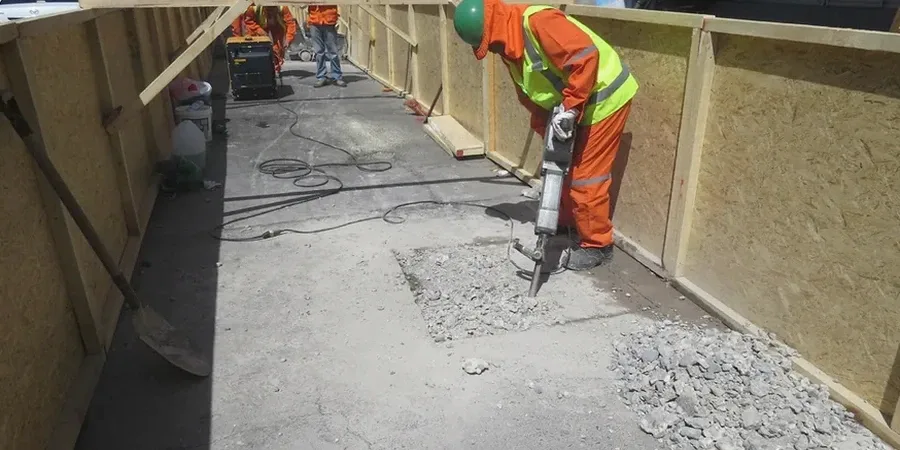
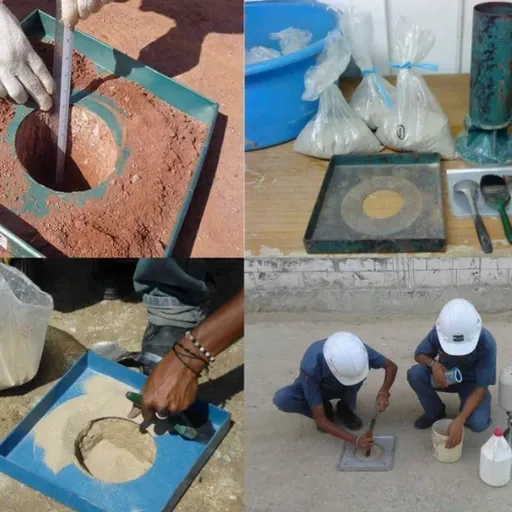
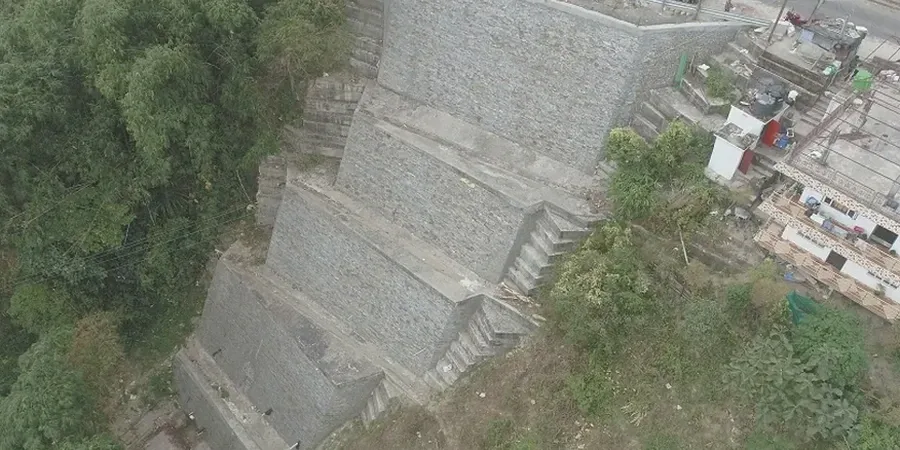
Saint John’s geotechnical profile is a direct product of its post-glacial and marine history, where dense lodgment till overlies the deformed bedrock of the Avalon terrane, and pockets of Leda clay appear in low-elevation zones near the Courtenay Bay causeway. These stratigraphic contrasts, coupled with the region’s freeze-thaw cycles that penetrate up to 1.2 meters, make compaction verification a critical step in any earthwork project. The sand cone density test, performed under ASTM D1556, remains the most reliable field method for determining in-place dry density when the material contains particles up to 38 mm — a common condition in Saint John’s weathered till.
Because the city’s average annual precipitation exceeds 1,200 mm and spring thaw routinely saturates the upper subgrade, moisture correction during density testing is not optional; it is the factor that often separates a passing lift from a failed one. Our technical team runs the procedure on structural fill beneath footings, utility trench backfill, and pavement subbase, correlating results with laboratory Proctor curves to confirm that compaction meets the minimum 95% standard specified in the New Brunswick Building Code.
Compaction acceptance in Saint John’s glacial till demands precise sand cone calibration — moisture variation alone can shift density readings by 3 to 5 percent.