GEOTECHNICAL ENGINEERING
SAINT JOHN NB
HomeInvestigationExploratory test pit

Exploratory Test Pit Excavation in Saint John NB

Knowledgeable. Thorough. Resourceful.

LEARN MORE

We bring in a 13-tonne excavator with a 24-inch bucket and start cutting. That’s how a test pit opens in Saint John—direct, fast, no guesswork. The city sits on a Paleozoic bedrock spine that dips under glacial till, and in the lower east side you hit marine clay within the first two metres. A single exploratory test pit gives you a clean vertical face where our geotechnical engineer logs stratigraphy, grabs undisturbed Shelby tube samples, and photographs the contact between fill and native soil. In a port city with 130,000 people and freeze-thaw cycles that chew up bad backfill, seeing the actual profile beats any borehole log. For deeper refusal verification we pair the pit with SPT drilling once we need rock coring below the 4-metre mark.

A four-hour open pit in Saint John gives you more geotechnical truth than a week of desktop studies.
Our service areas

Our approach and scope

The most common mistake we see is assuming bedrock is shallow everywhere. Saint John’s geology is lumpy. On the west side, granite outcrops at surface. In Millidgeville, you get 3 metres of dense till before you hit it. In the old South End, there’s 6 metres of ash and rubble from the 1877 fire sitting on soft estuarine silt. If the excavator operator doesn’t know the difference, he’ll scrape refusal on a boulder and call it bedrock. We don’t. We probe each pit floor with a dynamic cone and log the refusal depth properly. Every exploratory test pit gets a field vane shear test in cohesive layers, pocket penetrometer readings on the face, and a photo log with time stamps. We follow CSA A23.3 for concrete exposure classification when we encounter sulfate soils, and we reference the NBCC 2015 for foundation bearing assumptions. The pit stays open as long as the client needs—usually two to four hours—so the structural engineer can walk it too.
Exploratory Test Pit Excavation in Saint John NB
Technical reference — Saint John NB

Local geotechnical context

Saint John rebuilt itself after the Great Fire of 1877, and that layer of burn debris still sits under half the downtown core. It’s loose, it’s variable, and it rots underground services. We’ve opened pits on Prince William Street and found charred timber cribbing at 1.8 metres—right where a new elevator shaft was supposed to bear. The biggest risk isn’t just settlement; it’s differential settlement across a footing that straddles sound till on one side and uncontrolled fill on the other. The NBCC requires a site investigation for any Part 4 building, but many smaller developers skip it until the city’s building inspector flags the permit. An exploratory test pit catches soft lenses, organics, and old infrastructure before the concrete truck arrives. On the east side, where marine clay extends to the Courtney Bay flats, we check for sensitivity—some of that material loses 90% of its strength when remolded. If you’re placing a crane pad or a tower crane base, that’s a critical detail.

Need a geotechnical assessment?

Reply within 24h.

Email: info@geotechnical-engineering.org

Regulatory framework

NBCC 2015 (National Building Code of Canada) – Section 4.2: Foundation requirements and site investigation triggers, CSA A23.3: Design of Concrete Structures – Exposure classes for sulfate and chloride in soil, ASTM D2488: Visual-manual description and identification of soils, ASTM D2573: Field vane shear test in cohesive soil, ASTM D1586: Standard penetration test (SPT) for deeper refusal correlation

Technical data

ParameterTypical value
Bucket width24 inch (600 mm)
Maximum reach4.9 m from grade
Typical pit dimensions2.5 m long × 0.6 m wide × 3.5 m deep
Sampling methodShelby tube, bulk bag, hand-carved block
In-situ testingField vane shear, pocket penetrometer, DCP on pit floor
Backfill compaction spec95% Standard Proctor (ASTM D698) if structural load follows
Refusal criteriaBedrock or boulder exceeding excavator break-out force

Quick answers

What does an exploratory test pit cost in Saint John?

For a single pit up to 3.5 metres deep, including mobilisation within the Saint John city limits, field logging, photo documentation, and a summary report, budget between CA$770 and CA$1,160. The range depends on access constraints, traffic control requirements, and whether we need a hydrovac assist around buried utilities.

How long does the pit stay open?

Typically two to four hours. We keep it open as long as you need for inspection, measurement, and sampling. If the pit must remain open overnight, we install steel trench plates and safety fencing per WorksafeNB requirements.

Can you dig test pits in winter?

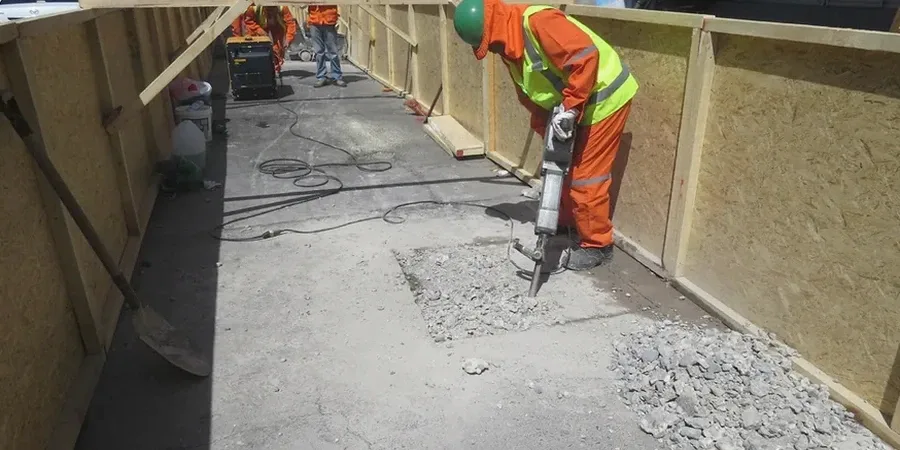
Yes. Frozen ground in Saint John usually extends 0.6 to 1.0 metres deep by February. We use a hydraulic hammer on the excavator to break the frost layer, then switch to the bucket. The pit face thaws quickly once exposed, and we log the unfrozen material the same day.

What depth can you reach before hitting refusal?

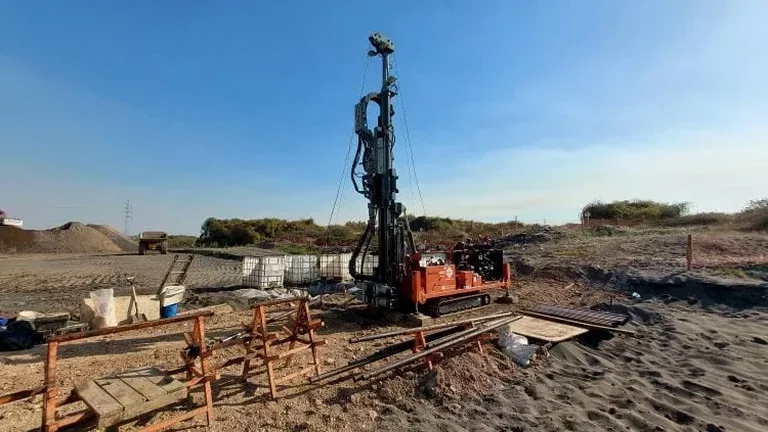
With our 13-tonne excavator, we typically reach 3.5 to 4.0 metres in overburden. If we hit boulders or bedrock sooner, we log the refusal and probe with a dynamic cone to confirm it’s not a floater. For depths beyond 4 metres, we recommend switching to an SPT drill rig.

Location and service area

We serve projects in Saint John NB and surrounding areas.

View larger map