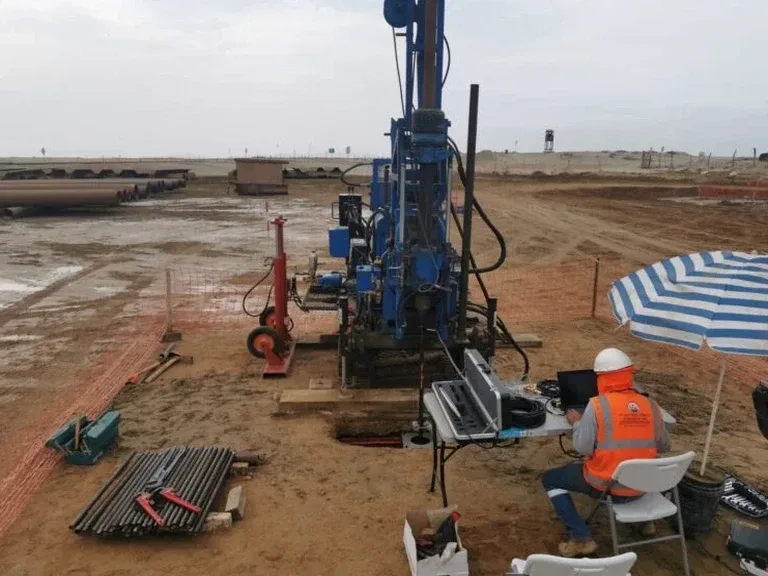
With an elevation ranging from sea level to over 100 meters on the city's rocky outcrops, Saint John's topography is a direct reflection of its glacial past. The 2018 flood events along the lower Cove and the constant tidal influence of the Bay of Fundy, which has a range exceeding 8 meters in the harbour, remind us that subsurface conditions here are never static. For any project near Marsh Creek or the heavy industrial zone east of Bayside Drive, understanding the transition between stiff glacial till and the sensitive post-glacial clays is critical. The CPT (Cone Penetration Test) lets us trace these transitions in real time, avoiding the gaps in data that can occur with traditional sampling alone. In areas where bedrock is shallow, we often pair the CPT with an SPT drilling program to confirm refusal depths, and for pavement design in commercial lots along Rothesay Avenue, the data feeds directly into CBR correlations without waiting for lab results.
In Saint John's marine clays, the pore pressure reading during a CPT dissipation test tells you more about the foundation settlement potential than any lab consolidation test can show in the first week.