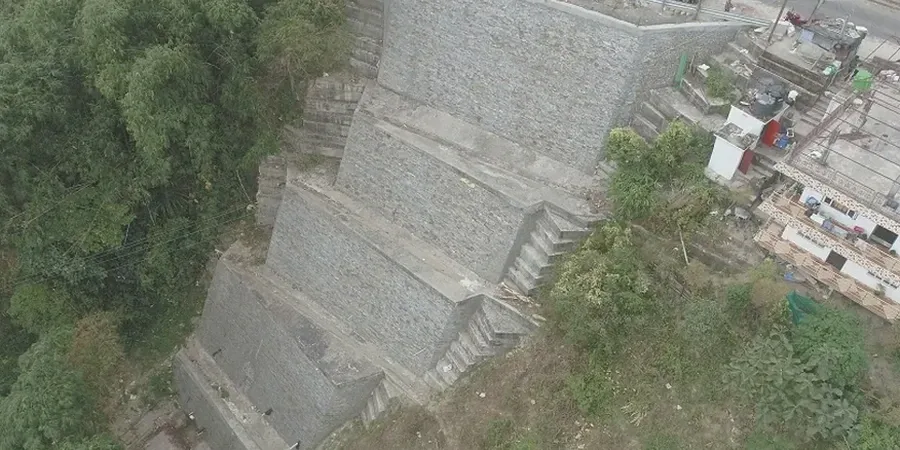
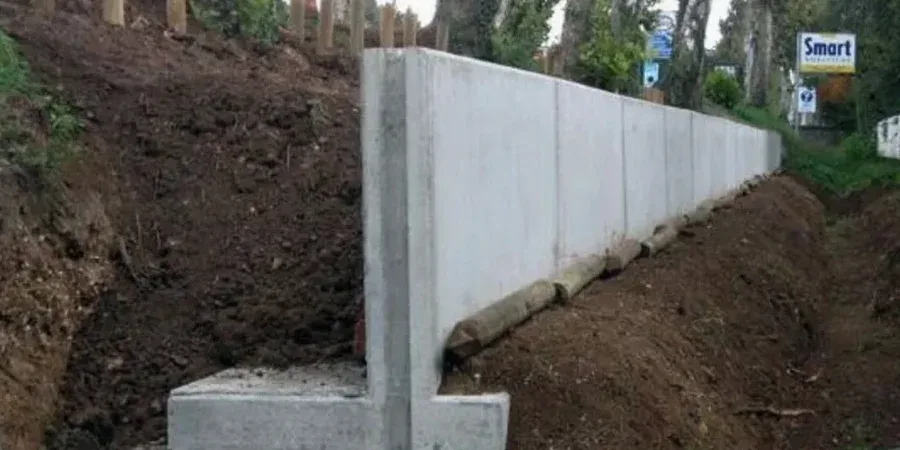
A retaining wall on Canterbury Street in uptown Saint John faces completely different ground conditions than one built out near the McAllister Industrial Park. Uptown, you're likely hitting dense glacial till or shallow bedrock, while the east side often deals with compressible marine clays deposited by the Bay of Fundy. That contrast isn't trivial: it dictates everything from drainage design to reinforcement schedules. Our geotechnical laboratory in Saint John provides the subsurface data that turns these local variables into a predictable design envelope. We don't guess at soil parameters; we measure them. For deep cuts near the harbor, we often pair retaining wall analysis with slope stability modeling to account for the steep grades, and we use CPT testing to map the soft clay lenses that plague the lower West Side.
A retaining wall in Saint John is only as reliable as the soil data behind its design: ignore the local marine clay and you're engineering a future failure.