GEOTECHNICAL ENGINEERING
SAINT JOHN NB
HomeRoadwayFlexible pavement design

Flexible Pavement Design in Saint John NB: Geotechnical & Structural Approach

Knowledgeable. Thorough. Resourceful.

LEARN MORE

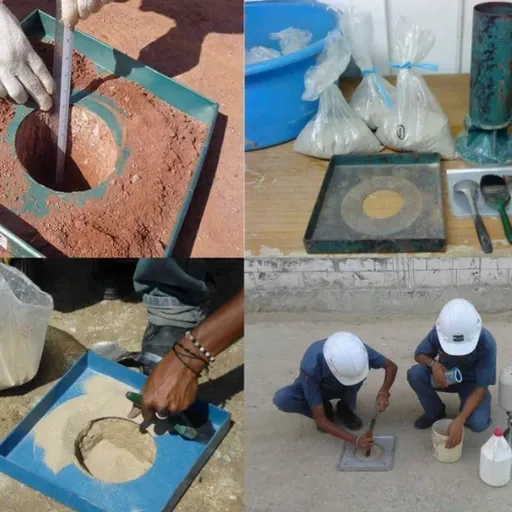
Flexible pavement design in Saint John demands a clear understanding of the local geotechnical framework. The National Building Code of Canada (NBCC) and CSA A23.3 govern structural concrete, but the pavement section is defined by subgrade behavior under seasonal loading. Saint John sits on Cambrian-Ordovician metasedimentary bedrock overlain by glacial till and marine clay pockets; the high water table near the Bay of Fundy, with tides exceeding 12 meters, accelerates moisture cycling in the upper layers. We integrate CBR road testing to calibrate the resilient modulus, and when the subgrade shows saturation, we combine with in-situ permeability to define drainage coefficients for the unbound base course. The result is a pavement structure that handles Saint John’s freeze-thaw cycles and heavy truck traffic on routes like Highway 1 without premature rutting or fatigue cracking.

A pavement is only as good as its subgrade in November: Saint John's 1.5 m frost depth and marine clay demand drainage design before asphalt.
Our service areas

Our approach and scope

The Saint John formation’s weathered shale and sandstone produce fine-grained residual soils with plasticity indices ranging from 12 to 25 in the lower-lying areas of Millidgeville and the central peninsula. These materials lose strength rapidly above optimum moisture, so our flexible pavement design always incorporates a granular separation layer when the subgrade CBR falls below 5%. A typical section here starts with a 300 mm select granular subbase, followed by a 150 mm crushed stone base, and 100 to 130 mm of hot mix asphalt, depending on traffic category. We use grain size analysis to verify filter compatibility between layers and Atterberg limits to detect expansive fines that could pump through the base under repeated wheel loads. For industrial yards in the port area, where container handling imposes high lateral stresses, we often specify a stabilized subgrade with cement or fly ash to increase the structural number without excessive asphalt thickness.
Flexible Pavement Design in Saint John NB: Geotechnical & Structural Approach
Technical reference — Saint John NB

Local geotechnical context

Saint John’s population of roughly 70,000 concentrates in a compact urban core where road rehabilitation means working around century-old buried utilities and variable fill. The 1929 Grand Banks earthquake, felt here at modified Mercalli intensity IV, is a reminder that seismic-induced settlement in loose fill can crack pavement sections. A more common failure mechanism we see is spring breakup: water trapped in the base course freezes and expands, then thaws in April, creating voids under the asphalt. In the Saint John River valley approach, differential settlement between cut and fill transitions generates longitudinal cracks within three years if the flexible pavement design does not include a reinforced geotextile at the subgrade-base interface. We also watch for sulfate-rich groundwater near the former industrial waterfront, which attacks stabilized layers if the wrong binder is selected.

Need a geotechnical assessment?

Reply within 24h.

Email: info@geotechnical-engineering.org

Regulatory framework

NBCC 2020 – National Building Code of Canada, structural design provisions, CSA A23.3 – Design of Concrete Structures, complementary for rigid tie-ins, ASTM D1883 – Standard Test Method for CBR of Laboratory-Compacted Soils, ASTM D2487 – Classification of Soils for Engineering Purposes (USCS), TAC Pavement Design and Management Guide – Canadian transportation context

Technical data

ParameterTypical value
Design subgrade CBR (typical range)3% – 6%
Frost penetration depth (Saint John)1.2 m – 1.5 m
Base course thickness (crushed stone)150 mm – 200 mm
Asphalt layer thickness (traffic cat. B)100 mm – 130 mm
Minimum subgrade resilient modulus40 MPa
Drainage coefficient (m_d)1.0 – 1.2
Design traffic ESALs (urban arterial)1×10⁶ – 5×10⁶

Quick answers

What is the typical cost for a flexible pavement design in Saint John NB?

The engineering scope and traffic category set the final fee. A complete package — subgrade investigation, CBR testing, pavement structural calculation, and construction specifications — for a Saint John project runs between CA$2,040 and CA$7,250, depending on the number of borings and design traffic (ESALs).

How does the Bay of Fundy climate affect pavement life in Saint John?

Frequent fog, high humidity, and intense freeze-thaw cycles accelerate moisture damage in the asphalt binder. We specify a PG 58-28 binder as a minimum and increase the air void target to 4% to resist stripping, plus edge drains where the water table is within 1.5 m of the subgrade.

When is geogrid reinforcement justified in a Saint John pavement section?

Geogrid becomes cost-effective when the subgrade CBR is below 3% or when building over soft marine clay pockets east of the Reversing Falls. It reduces the required base thickness by up to 30% and controls differential settlement at cut-fill transitions.

What traffic data do you need to start the design?

We require the average annual daily traffic (AADT), percentage of trucks, lane distribution factor, and design period — typically 20 years for municipal roads in Saint John. With these, we compute the design ESALs and select the structural number accordingly.

Location and service area

We serve projects in Saint John NB and surrounding areas.

View larger map